TikTok video breakdown: 9 seconds, 380x its follower base.
A 9-second human-AI interaction bit: the creator escalates a simple bilingual translation question until the AI voice assistant breaks its polite programming and sighs. 3.8M views against a 10K follower base, a 380x reach ratio driven by completion, not conversation.
niche, human-AI interaction
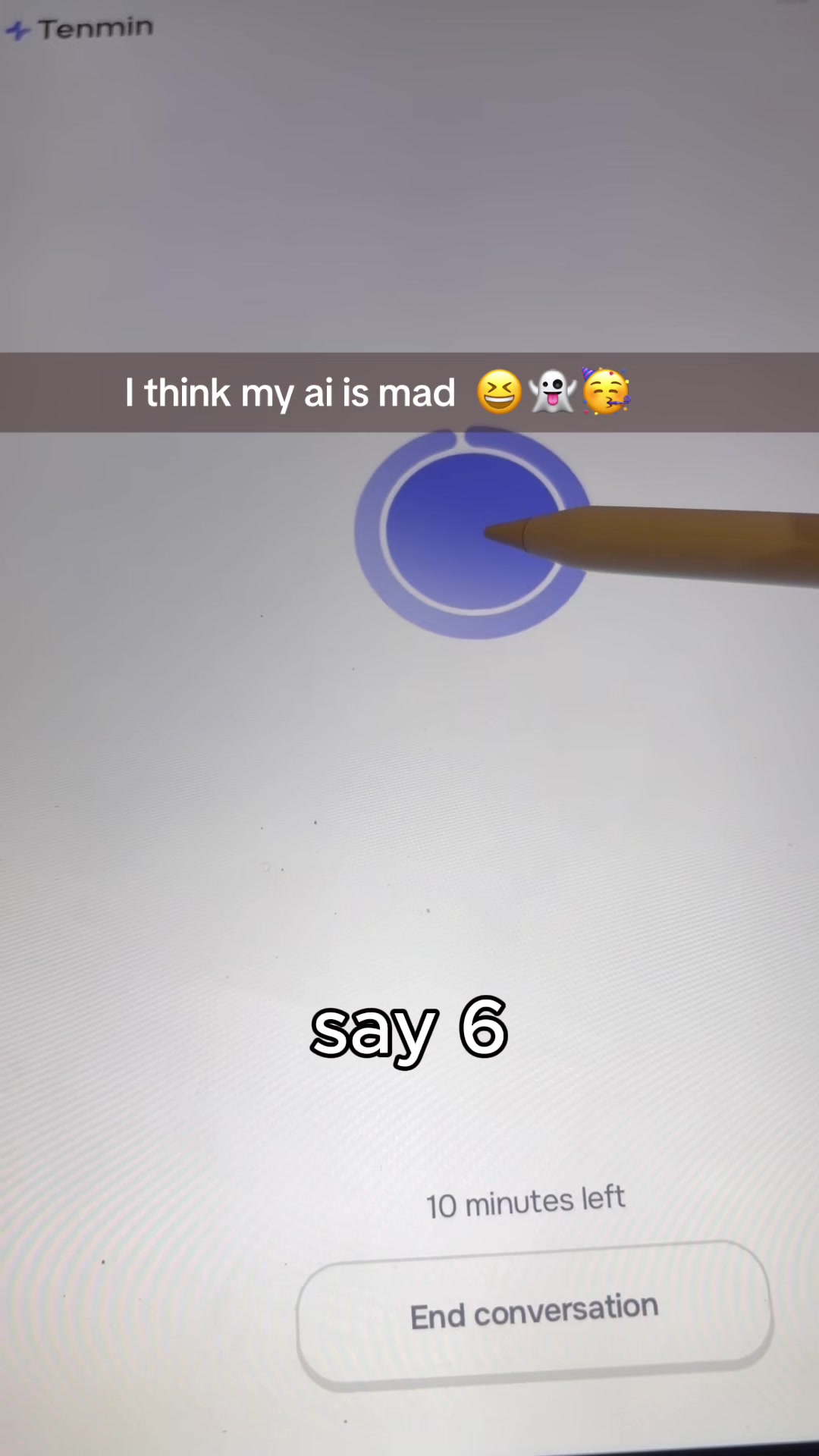
“I think my ai is mad 😆💀😤 how do I say six in Korean”
view the source post
the uncanny valley of AI emotionality is the whole asset.
topic, Lane: AI voice assistant humour. Barrier to entry: finding a linguistic trigger that reliably breaks the assistant's register, which is why the format has not been flooded.
core formula
intriguing anthropomorphic premise text overlay · rapid question-and-response escalation · natural laughter and AI sigh closeso what actually happened here?
what this video does
A reaction bit with no dead air: one bilingual question, escalated until the assistant answers out of character.
what the data says
Viewers treated it as a finished joke, they archived and passed it on instead of debating it.
core insight
The bilingual homophone does the work: it forces the assistant to play the straight man, so the break in its voice reads as real frustration.
what was this video for?
built affinity.
Viewers loved watching it but didn't save or share it at the same rate, that's pure affinity. It deepened the audience already there rather than bringing new people in. Good for the long game; don't expect it to move the follower count this week.
“I think my ai is offended 😆💀😤 how do I say “thank you” in Japanese”
build brand, memory and affinity
like 9.51%A like is a silent nod of respect, memory, not recruitment.
grow followers, new reach
save 1.2% · share 0.71%Saves and passes are the recruiting signals. Both fired, both stayed secondary.
spark conversation
comment 0.03%The joke was self-explanatory, so it left nothing to discuss.
6 beats across four phases.
Every beat from the full report, with the job it does and why it sits where it sits.
hook
0s–1s- 0s-1s11% of runtime
01 open loop text overlay + simple question
why here: It immediately establishes the curiosity loop and sets up the linguistic premise inside the first second.
setup & escalation
1s–4s- 1s-2s11% of runtime
02 first question asked plainly, AI answers in its standard register
why here: The neutral baseline is what makes the later break in tone readable as emotion rather than noise.
- 2s-3s11% of runtime
03 the question repeats, tightening the loop
why here: Repetition is the comedic engine, it also signals to the viewer that a break is coming.
- 3s-4s11% of runtime
04 the bilingual homophone is pushed one more time
why here: The linguistic trap is fully set here, so the payoff needs no explanation when it lands.
climax
4s–5s- 4s-5s11% of runtime
05 the AI voice breaks register into an exasperated sigh
why this beat sits here
unlock the full breakdown
payoff
5s–9s- 5s-9s44% of runtime
06 creator's natural laughter closes the bit, no CTA
why this beat sits here
unlock the full breakdown
how was it shot and structured?
- format
- talking head, real speaking
- structure
- reaction
- hook type
- curiosity
- visual composition
- text overlay
- cta type
- none
- media type
- short video, 9:16
why each choice was made · in the full report
unlock the full breakdownsilent entertainment share magnet.
Almost all of the interaction volume landed on one button. Read the split below as a distribution signal: the platform kept pushing this to non-followers because people finished it and reacted, not because they argued about it in the comments.
where did the interaction actually land?
why did people stay for nine seconds?
the hook, psychologically
The hook triggers cognitive dissonance by assigning a volatile human emotion to an inherently logical, emotionless tool. Viewers are driven by a psychological need to resolve the contradiction, staying to hear whether the AI actually sounds angry or the creator is exaggerating.
three mechanisms carry it, at the same levelanthropomorphic expectation violation
stronghow this mechanism fires
unlock the full breakdownbilingual wordplay payoff
mediumhow this mechanism fires
unlock the full breakdownlow-commitment shared amusement
stronghow this mechanism fires
unlock the full breakdown
who did it actually reach?
“Gen Z and Millennial internet users familiar with AI tools, amused by anthropomorphic AI behavior and bilingual wordplay.”
- demographics
- Gen Z and younger Millennial internet natives, likely 18-34, highly active on social and using AI tools daily.
- core desire
- Quick, high-dopamine entertainment that subverts the sterile, corporate nature of modern technology. They crave organic, unpolished humor that makes the digital world feel human. Without this content they'd be left with dry tech tutorials and polished corporate AI ads.
- why they watched
- They use voice assistants every day, so a claim about one having a mood is a promise only this audience can immediately test.
- conversion path
- The end state is a DM to a friend or a spot in a private folder of funny clips, not a profile visit.
how to run this pattern yourself.
- 4.1hook pattern
- 4.2how to make it
- 4.3the rest of the brief
4.1 what is the hook pattern?
I think my [X] is [Y] 😆💀😤 how do I [Z]
4.2 how do you make it?
- 01
Find the linguistic trap first: a question whose correct answer in another language collides with a familiar English word or number. The trap, not the edit, is the asset.
- 02
Put the emotion in the first overlay frame (“I think my [X] is [Y]”) and withhold the proof, the viewer stays to close the loop you just opened.
4.3 what is left in the full report?
remaining shoot brief · in the full report
unlock the full breakdown